Identity theft protection
for your face and online reputation
Is someone using your face? Your photo can build your brand or be used in a scam. Surfface finds where your face appears online. Think of it as a practical face-search layer for modern identity theft prevention and identity theft protection.
Online impersonation and identity theft are not edge cases
In the U.S., consumers reported
over $12.5B lost to fraud in 2024 and imposter scams accounted for $2.95B of that total
Federal Trade Commission, 2024
The FBI logged
FBI IC3 Report, 2024
 859,532 internet-crime
complaints with $16.6B
in reported losses in 2024

859,532

$16.6B
73% of U.S. adults faced a scam;
21% lost money
Online Scams and Attacks in America Today by Pew Research Center, 2025
These numbers become real reputational damage for individuals and real financial exposure for businesses. Identity theft protection is no longer only about credit cards and passwords. It also includes protecting the public signals that make people believe they are dealing with you.
So what is identity theft?
In simple terms, identity theft happens when someone uses your personal or financial information without your permission. Online impersonation is not always the same as credit or financial identity theft, but it can be an early warning sign. A scammer may use your face, name, job title, profile photo, or public reputation to win trust, get clicks, collect payments, request codes or manipulate people who know you.
The story: when your face becomes someone else's asset


Jordan
CEO - Founder
Austin, TX
Jordan runs a small design studio in Austin. Their work lives online: client testimonials on LinkedIn, a few speaking clips on TikTok, and a tidy Instagram portfolio.

One morning, a client emails:
«Is this you? Congrats on the new venture.»
It is a short video ad. Jordan’s face. Jordan’s name. Jordan’s profile photo, cropped from a conference headshot.
But the ad is selling a sketchy “AI investment community” and pushing people into DMs for a “limited invite.” The comments are brutal. A few tags link back to Jordan’s real profile. Jordan did not approve any of it.
Then it gets worse. A second account shows up with the same photo, a slightly different username, and messages to Jordan’s followers asking for a “quick favor.” Classic social engineering. No deepfake required. Just a believable face and a bit of urgency.


This is how reputations get hijacked. One stolen image multiplied across platforms.
You might already be getting impersonated.
Stay protected. Stay empowered. Use Surfface.
The modern impersonation playbook and why it works
Impersonators do not always steal an identity the way movies show it. Often, they borrow credibility long enough to get trust, clicks, replies, codes, payments or private information.
Common tactics include:

Fake profiles
using your headshots to DM friends, followers, customers, or coworkers

Phishing and "friendly fraud"
"It's me, new number. Can you send the code?"

Unauthorized ads
featuring your face to sell products, courses, crypto, or fake giveaways

Reputation sabotage
where your photos appear alongside toxic content to trigger backlash

Executive impersonation
using leadership photos to pressure employees, vendors or customers
For businesses, impersonation is not just embarrassing. It is expensive. The FBI reports Business Email Compromise (BEC) losses of about $2.77B in 2024, and many BEC schemes begin with impersonation and trust-building before money ever gets mentioned (FBI IC3 Report, 2024).
For individuals, the impact can include financial loss, doxxing, job risk, and long-lasting search results that do not disappear on their own.
Where Surfface fits: reputation defense you can actually use
Most people discover impersonation by accident. A friend spots a fake profile. A client forwards a suspicious link. A follower asks, "Is this your account?"
Surfface gives you a proactive way to check before trust is damaged. Instead of waiting for a scam to reach your customers, followers, coworkers or family, you can search for photo misuse on your terms. It is a practical layer of identity theft prevention and online reputation protection.
Upload a photo and Surfface scans public online sources to find where that face appears. It is built to surface lookalike uses of the same image, including reposts, crops, and profile-photo reuploads that often signal impersonation or photo theft.
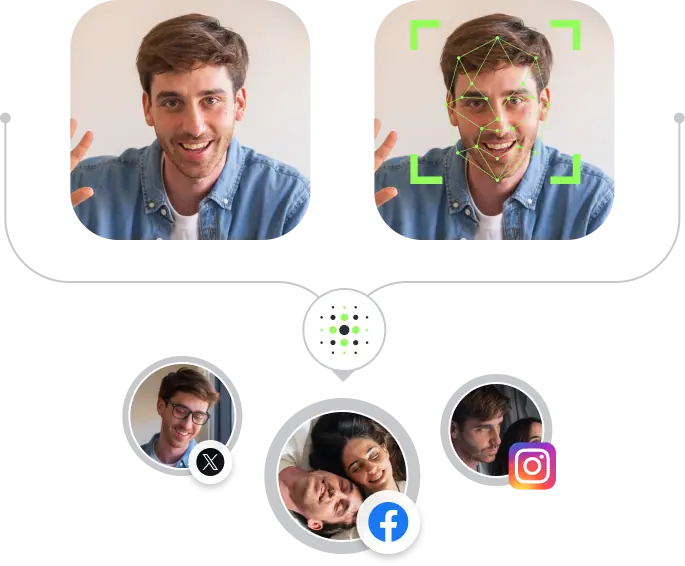
With Surfface, you can:
Upload a photo (headshot, speaker photo, or a team member’s public-facing image)
Scan for matches across the open web and public social content, including Instagram and TikTok
Review results for duplicate photos, lookalike crops, reposts and profiles using your image
Investigate fast by spotting patterns like repeated bios, shared links, and "DM me" funnels
Take action by documenting evidence, reporting abuse, and protecting your audience

Where is my face being used, and by whom?
Online reputation protection becomes a single, clear question.
Stay safe. Stay informed. Use Surfface.
Use cases that matter
Someone made a profile with my photo
A fake account is rarely harmless. It is usually a funnel. Surfface helps you find other public profiles using the same face or image. Scammers often run several accounts at once. When you can see the pattern, you can respond properly: document the evidence, report the accounts, warn your audience and reduce ongoing harm. This is one of the fastest ways to stop online impersonation before it turns into a larger identity theft problem.
Why this matters: imposter scams drove $2.95B in consumer losses in 2024 (Federal Trade Commission, 2024).
My face is in an ad I never approved
Unauthorized ads can damage your credibility even when they look "positive." Your face becomes the trust layer for a scam product, a shady offer, or a misleading campaign.
Surfface helps you spot where your images are reused so you can gather evidence, including screenshots, links, dates, usernames and source pages. From there, you can submit takedown requests, report abuse and protect your professional identity with stronger identity theft protection.
A scammer is using our exec or team photos to target customers
Brands often learn about impersonation after customers complain: "Your support team asked me to pay in crypto."
Surfface supports proactive checks for:
Founders and executives (high-value targets)
Salespeople and recruiters (common job scam vectors)
Customer support reps (common account recovery scams)
Creators and influencers partnered with your brand
Business reality check: the FBI reports massive losses across internet-enabled crime, including multi-billion-dollar BEC impact (FBI IC3 Report, 2024).
Red flags to look for in results
When Surfface returns matches, these patterns often signal abuse:

Same photo, different username (especially extra underscores, numbers, "official," or "backup")
Bio and link patterns such as WhatsApp or Telegram links, "investment mentor," "DM for collab," "limited slots"
Engagement mismatch, including brand-new accounts with sudden follower spikes
Copy-paste content pulled from your real posts
Multiple platforms using the same image to route victims into DMs
The goal is clarity: separate harmless reuse (like legitimate reposts) from high risk impersonation and stop a fake identity before it spreads.

Find fake profiles using your face
Spot accounts that reuse your headshot, repost your images, or create lookalike profiles designed for scams and social engineering.
Add this to your monthly reputation check routine.
What to do if you find misuse
When you find suspicious usage, move quickly and methodically:

Capture evidence: screenshots, URLs, timestamps
Check the pattern: are there multiple accounts using the same photo?
Warn your audience with a short, calm post: "This account is not me. Please report."
Report on-platform using impersonation and fraud categories
Lock down accounts: MFA, stronger recovery options, unique passwords
Escalate if money is involved: FTC and/or IC3 reports (U.S.)
Online scams are widespread. Pew Research Center found 32% of U.S. adults experienced an online scam or attack in the past year, and scam attempts hit email, texts, and social constantly (Pew Research Center, 2025). Fast response shrinks the window where impostors can convert victims and strengthens your overall id theft prevention posture.
Why face search is reputation protection, not curiosity
Name search is easy to evade. A scammer can change usernames and bios instantly. Your face is the anchor that keeps working for them until you find it.
Surfface gives individuals and businesses a practical way to answer one high-stakes question: Is my image being used to trick people, and what can I do right now to protect my online reputation and help prevent identity theft?

Something feels off? Confirm it fast
If someone is pretending to be you, speed matters. Search your face, collect evidence, and respond with clarity.
Stay informed. Stay protected. Use Surfface.
Questions & answers
Online impersonation happens when someone uses your face, photos, name, job title, biography, or other personal details to pretend to be you or create a misleading identity.
It is not always the same as financial identity theft, but it can be an early warning sign. Impersonators may use your identity to contact friends, target customers, promote scams, request money, collect verification codes, or damage your online reputation.
Upload a clear photo to Surfface and run a face search. Surfface checks public web sources and public social content for matching faces, duplicate photos, cropped images, reposts, and profiles that may be using your appearance.
Review names, usernames, biographies, locations, links, and account activity connected to each result. These details can help you distinguish legitimate uses of your photo from possible impersonation, identity misuse, or reputation abuse.
Surfface can help identify public profiles and pages that use the same face or image, including altered versions that have been cropped, resized, compressed, mirrored, or reposted.
Possible warning signs include your photo appearing under another name, copied profile details, suspicious investment or dating accounts, unauthorized advertisements, and several profiles directing users to the same messaging app or payment link.
No. A face match or reused photo is an investigative lead, not automatic proof of identity theft or fraud. Your image may appear in a legitimate repost, news article, event page, company website, fan account, or other authorized source.
Check the complete context before taking action. Look for false identity details, scam links, copied content, misleading claims, requests for money, or attempts to contact people while pretending to be you.
Save evidence before reporting the account. Record the profile URL, username, screenshots, messages, dates, payment requests, advertisements, and any links connected to the misuse.
Report the content through the platform’s impersonation, fraud, or privacy process. Warn anyone who may be targeted, secure your real accounts with strong passwords and multifactor authentication, and continue monitoring for new copies.
If the impersonation involves financial fraud, threats, extortion, stalking, or sexual exploitation, preserve all evidence and report it to the appropriate platform, financial institution, or law enforcement authority.
No. Surfface is a face search and public-data discovery tool focused on finding possible photo misuse, fake profiles, online impersonation, and reputation risks. It does not monitor credit reports, bank accounts, Social Security numbers, or private financial activity.
Surfface can support identity theft prevention by helping you discover where your public-facing images may be used online. It works best as one part of a broader protection strategy that also includes account security, credit monitoring, privacy controls, and regular reputation checks.