How to Tell If a Dating Profile Is Fake Using Photos
Stanley Wiggins
October 6, 2026
8 min read
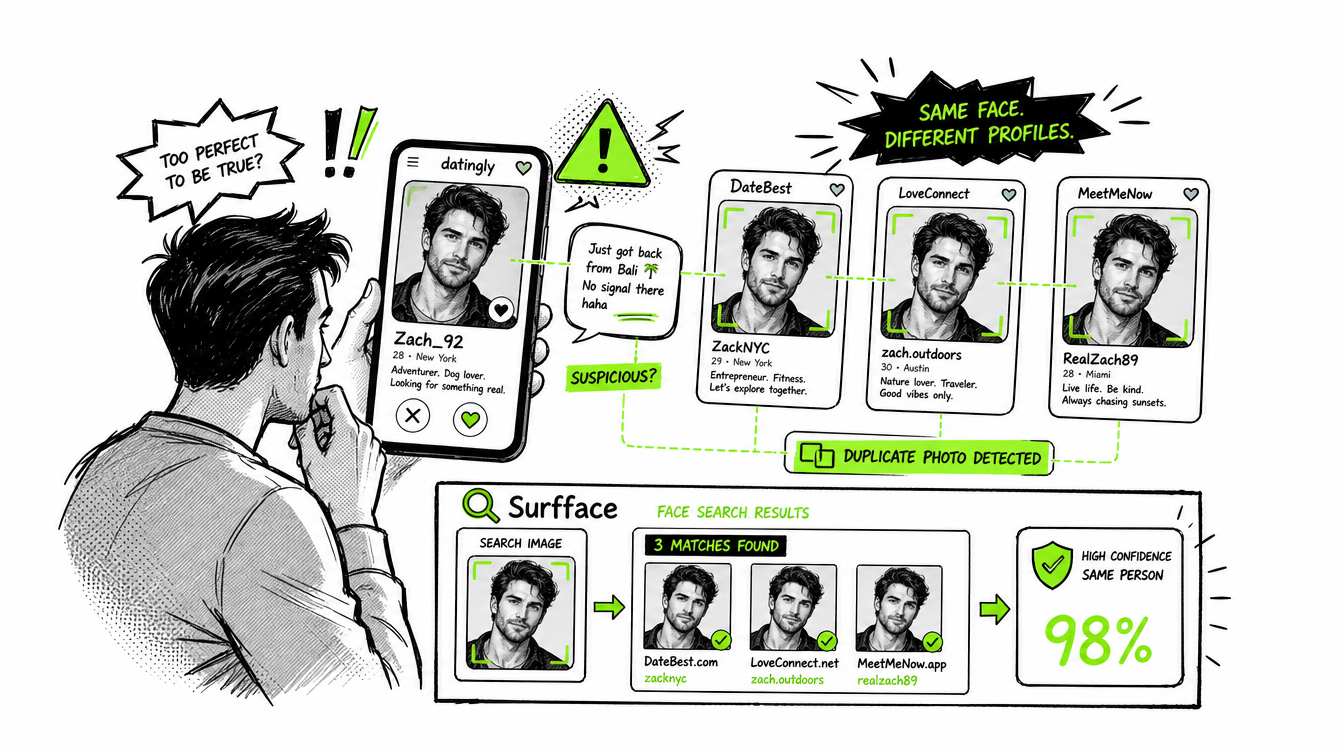
Fake dating profiles are often built around stolen photos, AI-generated faces or real images taken from social media. The fastest way to check risk is to inspect the photos first: look for inconsistent images, too-perfect pictures, mismatched age cues, reused model-like shots, missing candid photos and signs that the same face appears under different names online.
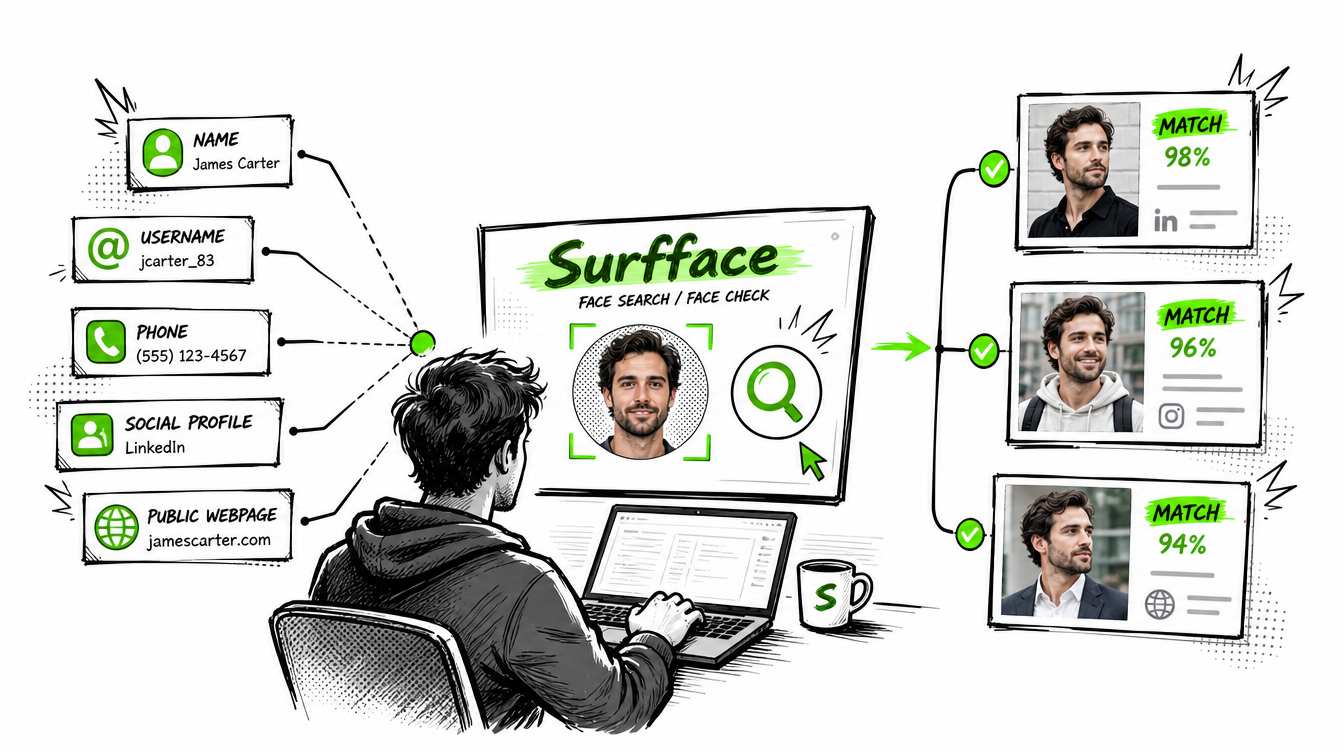
A face search engine like Surfface can help you check where a face appears across public websites, news, blogs, social media profiles and available U.S. public records such as mugshots and sex offender registries. This does not prove everything about a person, but it can reveal public evidence before you trust, pay or meet.
This matters because online scams are now common. Pew Research Center reported in 2025 that 73% of U.S. adults had experienced at least one online scam or attack and 21% had lost money because of one. Pew also found that about four in ten Americans see scams as a major problem on dating or cryptocurrency platforms.
Why fake dating profiles usually start with photos
Fake dating profiles need trust fast. Photos do that faster than text.
A scammer can fake a name, job, city, accent, backstory and relationship status in minutes. A face is harder to fake consistently. That is why profile photos are one of the strongest clues when you are trying to understand how to tell if a dating profile is fake.
Many dating site scams with fake profiles use one of these photo tactics:
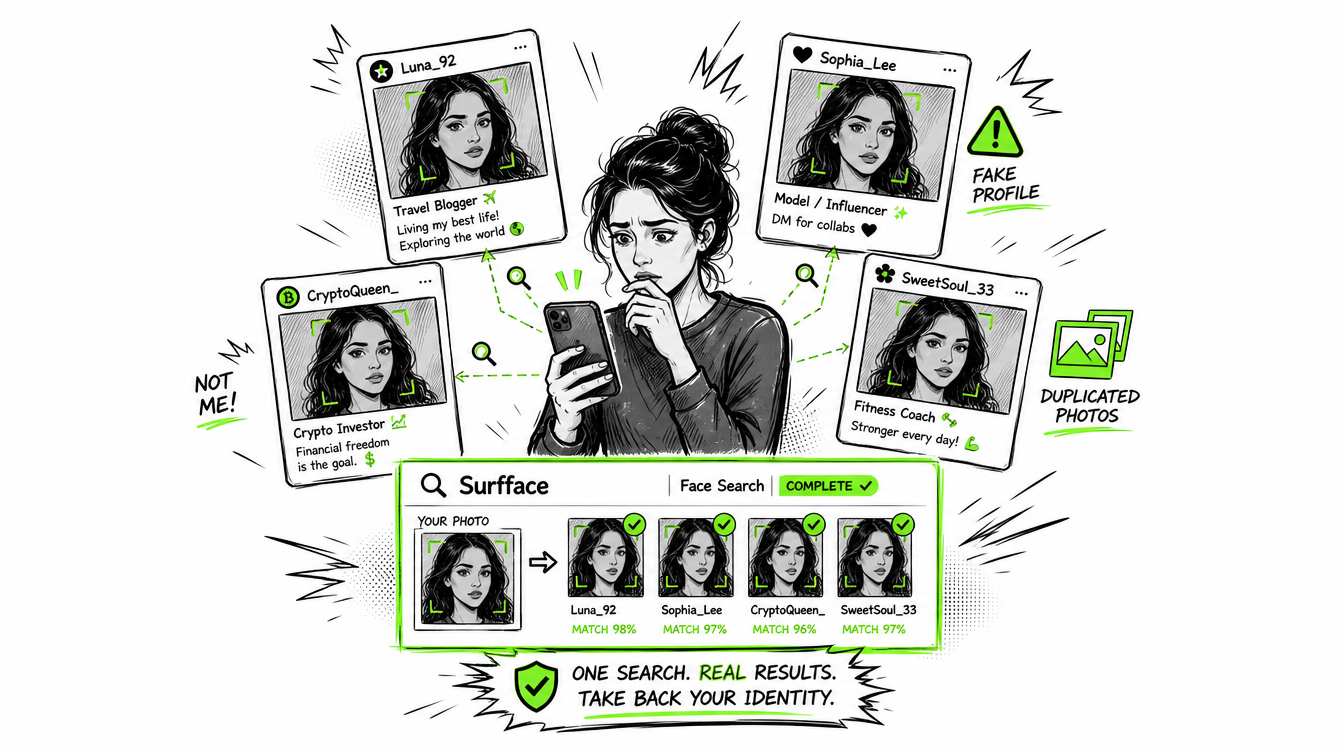
- They steal attractive photos from Instagram, TikTok, Facebook or creator pages.
- They reuse photos from older scam accounts.
- They use AI-generated portraits that look polished but have strange details.
- They use a real person’s photo while inventing a new identity.
- They mix photos of different people and hope you do not notice.
- The profile may feel emotional and convincing. The photos may still expose the lie.
How to spot a fake dating profile by checking the photos
Look for photos that feel too perfect
Not every attractive profile is fake. The warning sign is not beauty. The warning sign is a photo set that looks manufactured.
Be careful when every image looks like a model shoot, luxury trip or heavily edited social media post. Fake dating profile pictures often have perfect lighting, no casual images, no friends, no ordinary background and no normal day-to-day context.
A real dating profile usually has visual variety. You may see a selfie, a social photo, a travel photo, a pet photo or a casual image. A fake profile often looks like a folder of stolen highlights.
Check whether the person looks the same in every photo
Scammers often collect pictures from different sources. Sometimes they use several people who look similar enough at first glance. Slow down and compare:
- Face shape
- Nose and jawline
- Eye spacing
- Teeth
- Hairline
- Ear shape
- Moles, tattoos or scars
- Age cues
If the person looks 24 in one photo and 36 in another without a clear explanation, treat it as a warning sign. If tattoos appear and disappear, if facial structure changes or if the body type looks inconsistent, the profile may be fake.
Watch for cropped photos and hidden context
Fake dating profiles often use tightly cropped photos because the original image had other people, logos, usernames or location clues. Heavy cropping can hide context.
Look for photos that cut off the background too neatly. Look for images where the face is clear but everything else is missing. Also watch for screenshots, low-resolution reposts and images with strange borders. These may be signs that someone saved the picture from another account.
Be careful with fake pictures for dating profiles that look AI-generated
AI images are improving quickly. Many public AI detectors are unreliable, especially with newer image models. A detector you find by searching online may miss advanced AI images or wrongly flag real photos.
Instead of relying only on an AI detector, inspect the photo manually:
- Do the hands look strange?
- Do earrings, glasses or hair blend into the background?
- Are the teeth too uniform?
- Does the skin look overly smooth?
- Are the eyes slightly mismatched?
- Is the background warped?
- Do shadows make sense?
Also ask for a quick live video call. A real person who is serious about meeting should be able to verify themselves without turning it into drama.
Pew found that 68% of Americans think increased AI use will make online scams and attacks more common. That is directly relevant to fake dating profiles because AI can now help scammers create believable faces, scripts and emotional messages at scale.
Use face search to check fake dating profile pictures
Why reverse image search is not enough
Traditional reverse image search can help if the exact same photo appears elsewhere. It may find a copied image from a website, article or public profile.
But reverse image search has limits. It may fail if the picture was cropped, filtered, compressed, mirrored or taken from a video. It may also miss cases where the same person appears in different photos.
That is why a face-focused search is more useful when the question is not “Where is this exact image?” but “Where else does this face appear?”
How Surfface helps check fake dating profiles
Surfface is built to search by face across public online sources. You upload a photo and Surfface checks where that face appears online, including public websites, news, blogs, social media profiles and available U.S. public records such as mugshots and sex offender registries.
This can help you answer practical questions:
- Does this face appear under a different name?
- Does it appear on multiple social profiles?
- Does it appear in public records?
- Does it appear in news or blogs?
- Does it look like a stolen creator photo?
- Does the dating profile match the public identity connected to the face?
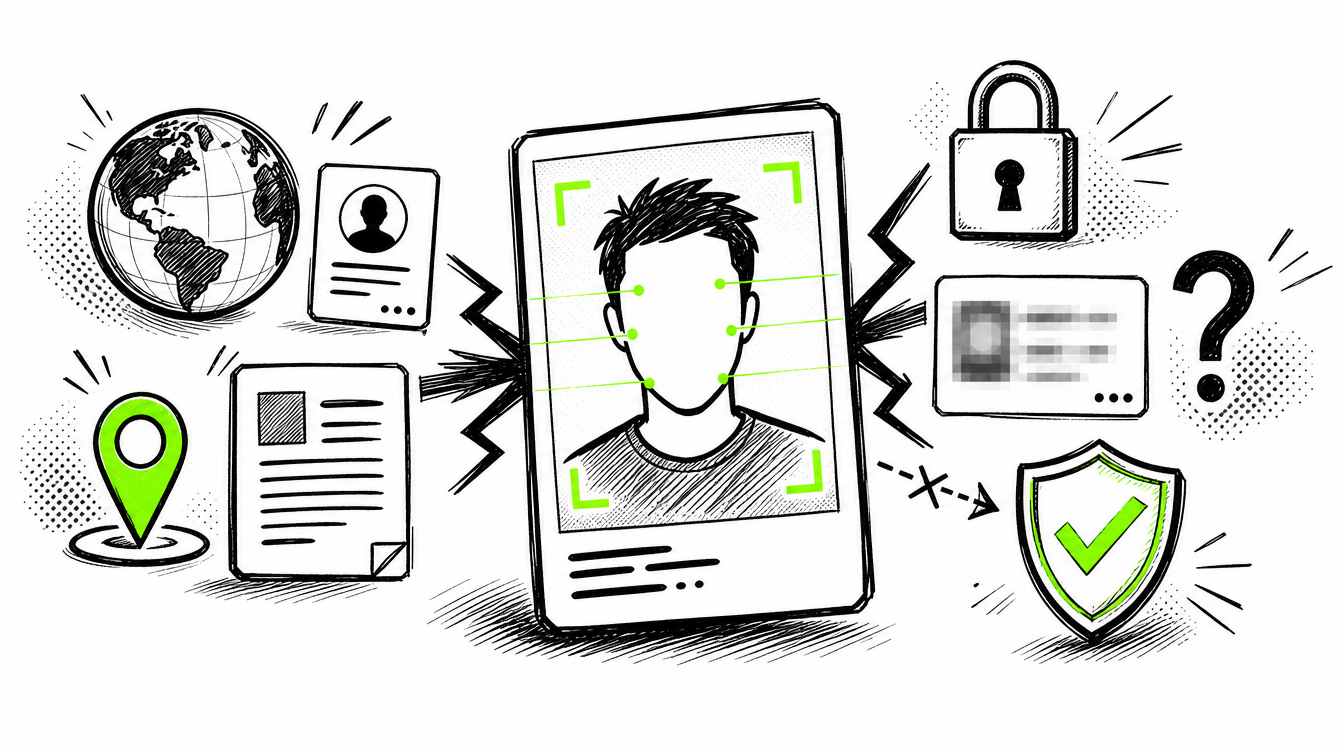
Surfface results should be treated as investigative leads. A match does not automatically prove the profile is fake. No match does not guarantee the person is safe. But public face matches can give you evidence before you send money, share private details or meet in person. See how Surfface helps detect catfishing, fake profiles and online impersonation scams.
Photo red flags that often appear in fake dating profiles
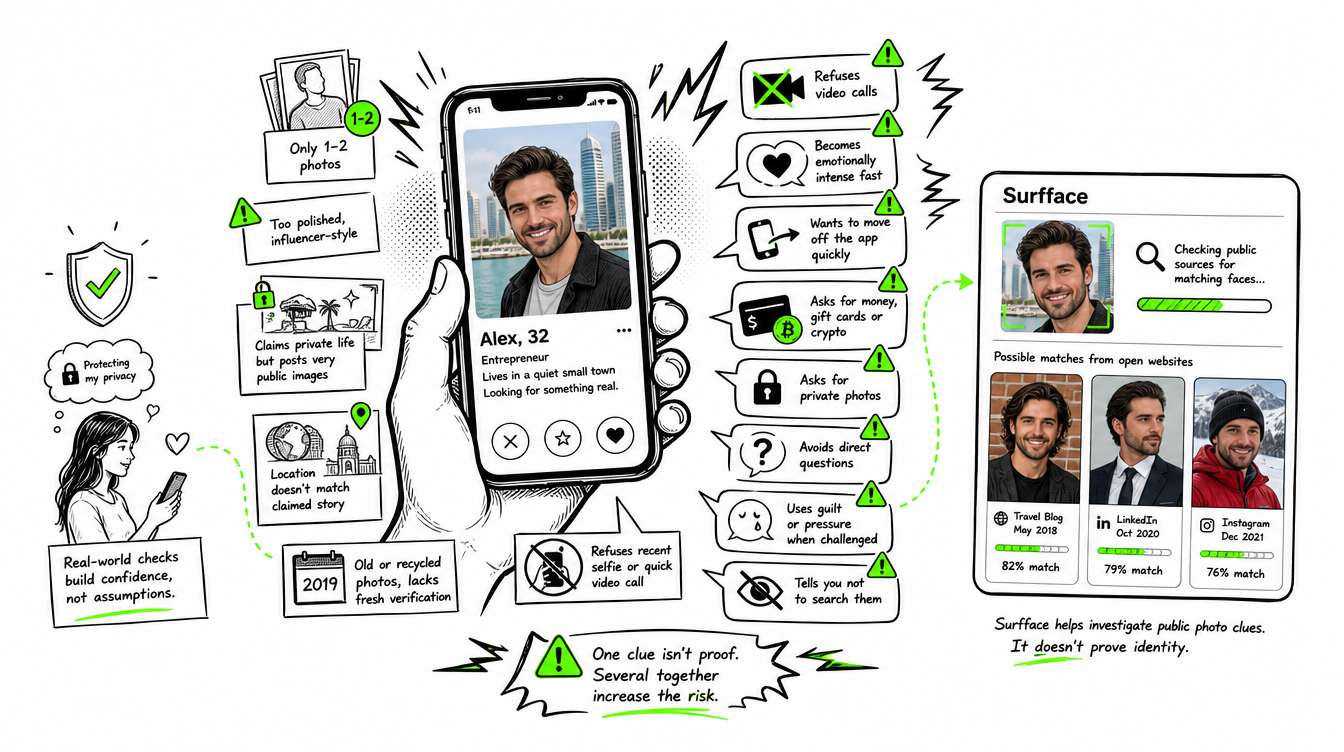
The profile has only one or two photos
A real person looking for a date usually has more than one usable photo. A fake profile often has one strong image and little else. This is common when scammers steal one picture and build a profile around it.
One photo is not proof of fraud. But if the person avoids sending more pictures, refuses a video call and moves the conversation fast, the risk increases.
The photos look public but the story feels private
A profile may show professional photos, travel images or influencer-style shots while the person claims to be private, shy or not active online. That mismatch matters.
If someone looks like they have a strong public online presence but you cannot find any supporting evidence, ask why. If they claim every account was deleted, hacked or hidden, be skeptical.
The photos do not match the claimed location
Fake dating profiles often use photos from another city or country. Look at the visual details:
- License plates
- Store signs
- Weather
- Architecture
- Power outlets
- Road markings
- Landmarks
- Clothing for the claimed season
If the profile says Los Angeles but every photo looks like Eastern Europe, Southeast Asia or a stock travel shoot, that is worth checking.
The person avoids fresh verification
A common scammer move is to avoid anything current. They may send more photos, but the photos still look old, polished or saved. Ask for a low-pressure verification step, such as a short video call or a quick selfie with a specific harmless gesture.
Do not ask for sensitive documents. Do not send your own sensitive documents. The goal is basic identity confidence, not invasive data exchange.
Behavior signs that support the photo evidence
Photos are the starting point. Behavior confirms the pattern.
Be careful when someone quickly becomes intense, romantic or urgent. Fake dating profiles often move fast because emotion reduces skepticism. Common lines include sudden love, military deployment, overseas work, a sick relative, frozen bank accounts, crypto opportunities, travel emergencies or a request to move off the dating app.
Pew found that most U.S. adults report getting scam calls, emails or texts at least weekly and one-third report getting scam messages on social media at least weekly. Scam behavior is not rare or unusual. It is now part of the online environment.
Photo red flags become stronger when they appear with these behavior red flags:
- They refuse video calls.
- They ask for money, gift cards or crypto.
- They ask for private photos.
- They want your phone number immediately.
- They avoid direct questions.
- They claim their camera is broken.
- They pressure you to trust them.
- They use emotional guilt when challenged.
- They tell you not to search them.
- A real person may value privacy. A scammer needs isolation.
What to do if you think a dating profile is fake
Run a face search before you trust
Start with the profile’s clearest face photo. Avoid sunglasses, extreme filters, group photos and blurry screenshots. Upload the image to Surfface and review public matches.
Look for identity consistency. One clear public profile with the same name and context is different from ten profiles with different names. Pay attention to social accounts, old usernames, public mentions and available U.S. public records where relevant.
Compare the evidence with the profile story
Do not look at one clue in isolation. Build a simple evidence map:
- What name do they use?
- What city do they claim?
- What job do they claim?
- Where does the face appear publicly?
- Do the public results support or contradict the story?
- Are there multiple identities connected to the same face?
- Are there public records or warning signals you should review?
This is how to spot a fake dating profile in a practical way. You are not guessing from vibes. You are comparing claims against visible evidence.
Stop sending information if the profile fails basic checks
If the photos look stolen, the story changes or the person pushes for money, stop. Do not argue with the profile. Do not reveal what you found in detail. Scammers can use your explanation to improve their next fake account.
Block the account, report it to the dating platform and keep screenshots if money, threats or impersonation are involved.
Common mistakes people make when checking fake dating profiles
They trust a good conversation more than evidence
Scammers are trained to sound warm, lonely, successful, spiritual, protective or wounded. A strong emotional connection does not verify identity.
If the photos fail basic checks, the conversation should not override that.
They assume no search result means the profile is real
No result is useful, but it is not proof. The person may have a small digital footprint. Their accounts may be private. The image may be new. The source may not be indexed.
Treat no result as one signal, not a final answer.
They ignore public record checks
Dating safety is not only about stolen photos. In some cases, users want to know whether a person has serious public records that may affect personal safety. Surfface can search available U.S. public records such as mugshots and sex offender registries when such data is publicly available and indexed.
Again, results are leads. Review the source context carefully before making conclusions.
Final checklist: How to tell if a dating profile is fake using photos
Use this checklist before you trust, meet or send money:
- Check if the photos look overly polished or stolen.
- Compare the face across all photos.
- Look for inconsistent age, tattoos, teeth, hairline and facial structure.
- Search the face with Surfface.
- Check whether the face appears under another name.
- Look for public social profiles that match the story.
- Watch for public records or warning signals where available.
- Ask for a simple video call.
- Refuse requests for money, crypto, gift cards or private documents.
- Report the profile if the evidence points to a scam.
Conclusion
Fake dating profiles are designed to feel real before you verify them. Photos are the best place to start because stolen identities, reused faces and inconsistent images often leave public traces.
If you want to know how to tell if a dating profile is fake, do not rely on one clue. Inspect the photos, compare the story, watch the behavior and run a face search. Surfface helps you search public web results, social profiles, news, blogs and available U.S. public records by face so you can check before you trust or meet.
Dating should not require paranoia. It does require evidence.

Stanley Wiggins
Stan leads product marketing at Surfface, bringing a mix of experience in OSINT and private investigations, along with expertise in digital marketing and product management.