Identify a Person in Photo: See Where a Face Appears Online
Stanley Wiggins
August 10, 2026
5 min read
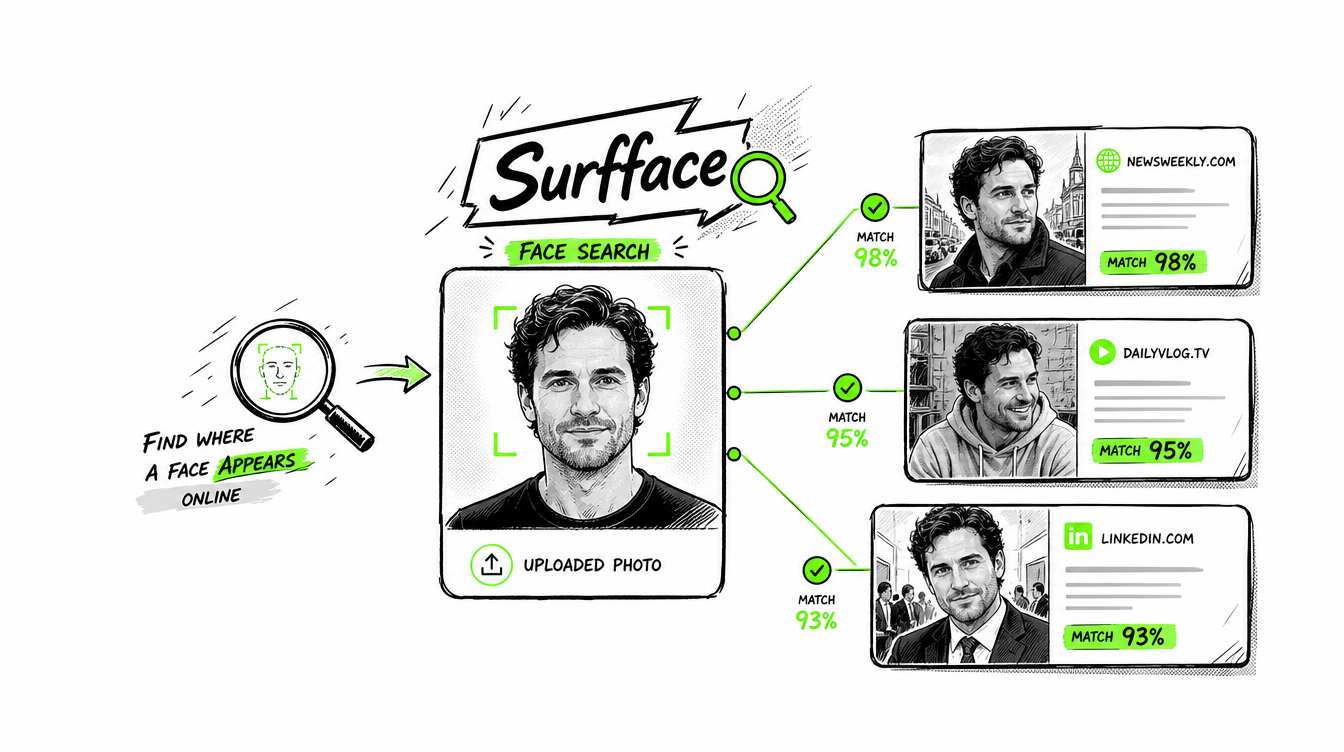
To identify a person by photo, upload a clear face image to a face search engine and check where that face appears in public online sources. Surfface helps you search public websites, news pages, blogs, social profiles and available U.S. public records such as mugshots and sex offender registries. It can help you find useful leads from one photo, but it cannot access private accounts, hidden messages or locked databases.
Sometimes a name tells you very little. A fake name can be typed in seconds. A profile can be invented. A phone number can be temporary. A face is harder to fake across the public web.
That is why more people now use face search to identify a person in a photo before they trust, meet, date, reconnect with or respond to someone online. A photo person identifier can help you check whether the same face appears on public social profiles, old web pages, news mentions, public records or other indexed sources.
Surfface is built for this exact task. It lets you run a face ID search from a photo and see where a face may appear online.
What does it mean to identify a person by photo?
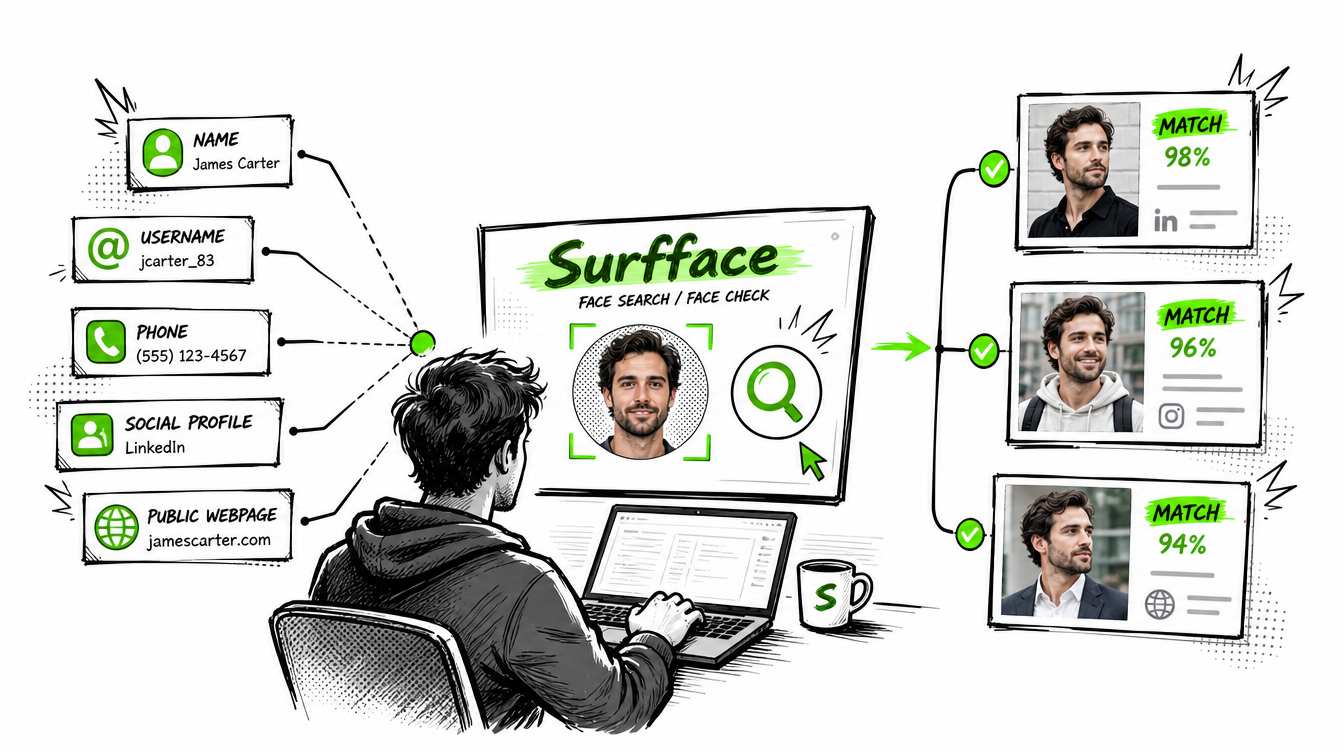
To identify a person by photo does not mean one tool magically reveals a guaranteed legal identity from one image. It means using a face photo as a search input to find public clues.
Those clues may include:
- Public social profiles
- Profile photos reused across websites
- News or blog mentions
- Public images indexed online
- Mugshots where available
- Registered sex offender records where available
- Other public-record signals in supported U.S. sources
This is different from a basic reverse image search. Traditional image search usually looks for the same image or near-duplicate copies. Face search focuses on the person in the image. That matters when the same person appears in another photo with a different crop, angle, hairstyle, background or lighting.
If you are asking how to identify a person in a photo, the practical answer is simple: search the face, review public matches and verify the context before you make any conclusion.
How Surfface helps identify a person in a photo
Surfface is a face search engine that searches public sources where a face may appear. Its index includes over 250 million social profiles and over 10 billion images. It also has dedicated U.S. public-record pipelines for mugshots, registered sex offender sources and other public checks where available.
This makes Surfface useful when you have only a photo and need to understand who the person may be, where the image appears and whether there are public signals worth checking.
Common reasons people use Surfface include:
- Checking a suspicious profile photo
- Finding public social profiles from a face
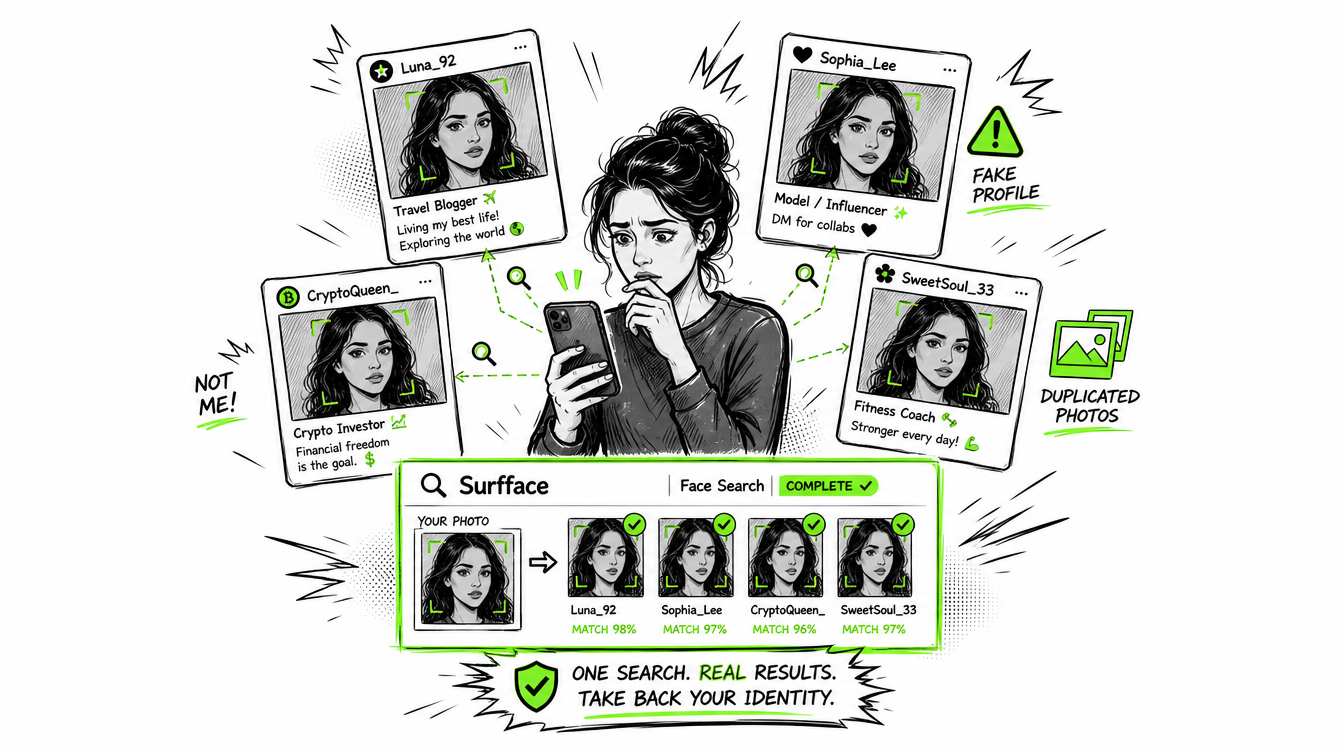
- Detecting impersonation or photo misuse
- Looking for reused images across the web
- Checking whether someone appears in public records
- Verifying a person before meeting or trusting them online
Surfface gives you leads, not final judgments. A match should always be reviewed carefully. Look at the source, context, date, location, profile details and similarity before deciding what it means.
How to identify a person with a photo
Step 1: Upload a clear face photo
Start with the best image you have. Use a photo where the face is visible, well-lit and not too small. Avoid heavy filters, sunglasses, extreme angles, motion blur or group photos where the target face is unclear.
If you have a name, email or social handle, you can add it as extra context. A face-first search is powerful, but text signals can help narrow the result when available.
Step 2: Run a free face search
After you upload the image, Surfface searches public sources where that face may appear. This can include public websites, blogs, news pages, social profile signals and available U.S. public-record sources.
The free search helps you understand whether the system found possible matches before you unlock more source details.
Step 3: Review possible matches
Do not stop at the first result. Check all visible match signals. Look for the same face across different photos, sources and contexts.
A strong result may show the person in multiple public places. A weak result may only look similar but belong to someone else. Face search is powerful, but human review still matters.
Step 4: Unlock sources if the match looks useful
If a match looks promising, you can unlock source details with credits. Depending on availability, this may show source pages, profile links, public-record context or other information connected to the match.
This lets you move from “this face looks similar” to “this is where the public source comes from.”
What can a photo person identifier find?
A photo person identifier can help find public evidence connected to a face. It may reveal that the same person appears under a different username, on a public social profile, in an article, on a public image page or in available U.S. public records.
This can be valuable in situations where a person gives you little information or where the information they gave you feels inconsistent.
For example, someone may claim to be a local professional, but the same photo may appear under another name. A profile may look new, but the face may already appear on older public pages. A dating profile may seem real, but the image may be reused from another public source.
Surfface helps you check these signals before you trust the story.
What public face search cannot do
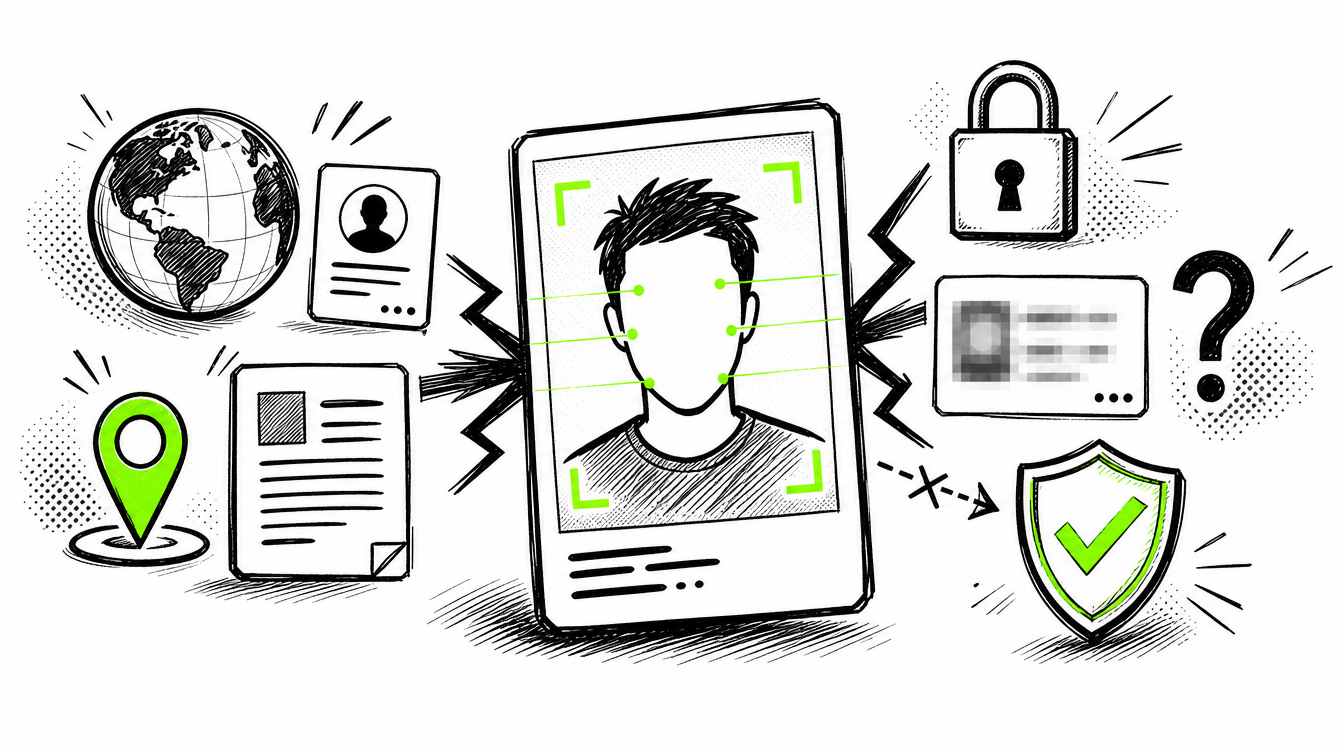
Public face search has limits. Surfface searches publicly available information. It does not open private accounts, bypass passwords, read private messages, access friends-only posts or search hidden social media areas.
A private profile may still expose some public signals, such as a profile photo, username, display name or preview page. Surfface can search what is publicly visible and indexed. It does not break into closed accounts.
Also, not finding a match does not prove the person is safe, honest or unknown online. It may mean the face is not in the indexed sources, the image quality is poor, the person uses private accounts or the content is unavailable for privacy, legal or safety reasons.
Why face search is useful but not unlimited
Face search is useful because it starts with what people often cannot fully fake: their face. One image can connect to public social profiles, reused photos, public mentions, mugshots, sex offender records or other open-source signals.
But no face search engine sees the whole internet. Coverage depends on the size of the index, source access, image quality, privacy rules and jurisdiction. Some results may be incomplete, outdated or unavailable.
Surfface also applies strict trust and safety controls. It does not allow searches involving minors, explicit content or pornographic content. Misuse can lead to account restrictions or bans.
Surfface is built for legitimate public-source search, not harassment, stalking, exploitation or unsafe use.
When should you use Surfface?
Use Surfface when you need to identify a person by photo using public information. It is especially useful when you have a face photo but no reliable name, when a profile feels suspicious or when you want to check where your own face appears online.
Many Surfface users also run face searches for safety reasons. Surfface has dedicated U.S. public-record indexes for mugshot and criminal-record faces, as well as registered sex offender sources where available. Click to read more about offender registry search. These checks can help you spot public warning signals before you trust, meet or continue talking to someone.
You can use Surfface before a meeting, before trusting a stranger, before responding to a suspicious profile or when checking whether your photos are being used somewhere without permission.
The rule is simple: check before you trust.
Start with a face photo
If you want to know how to identify a person with a photo, start with a clear image and run a Surfface search. Review the public matches, compare the context and unlock source details only when the result looks useful.
Surfface helps turn one face photo into public web clues. It will not tell you everything, but it can show where that face appears online and help you make a more informed decision.

Stanley Wiggins
Stan leads product marketing at Surfface, bringing a mix of experience in OSINT and private investigations, along with expertise in digital marketing and product management.