How to Choose a Reliable Face Search Engine Online
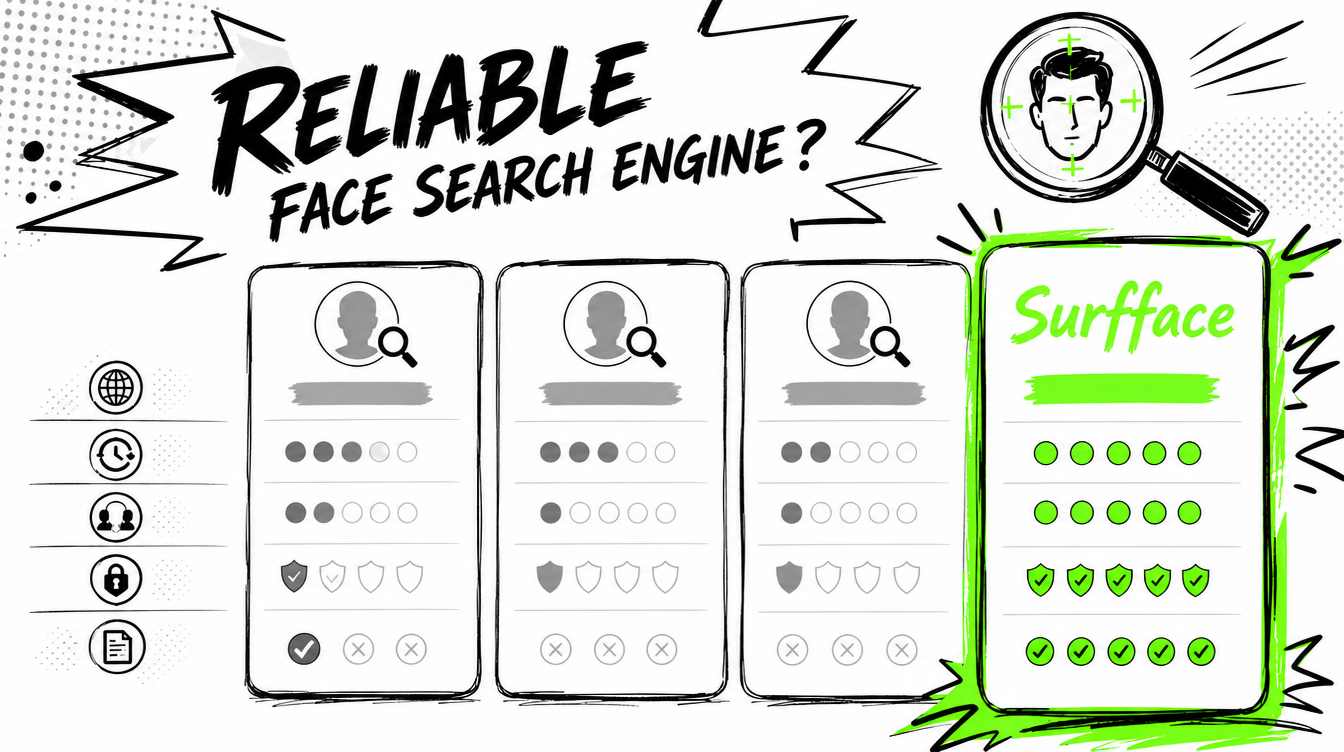
Not every face search engine online is reliable. Some tools overpromise, hide weak results behind paywalls, or use misleading ads to make users pay before any real search happens. Before using a face image search tool, check what it promises, what it searches, and how it handles privacy.
A reliable face search engine is not about big promises. It is about real coverage, updated sources, useful matches, clear pricing, and responsible data handling.
That’s why Surfface gives you a clearer way to start. Upload a photo, run a free face search, and check whether the results are worth exploring. Ready to try Surfface’s face search engine?
Avoid tools that promise everything
If a tool says it can find everything about any face or person, be careful. No reverse image search engine for faces can guarantee complete results.
Public web data is incomplete. Social profiles can be private, deleted, renamed, or never indexed. Public records vary by source, state, county, and update frequency.
A serious face search engine such as Surfface should be clear about limits. It should show possible matches, confidence signals, and sources instead of pretending every result is guaranteed.
Check the size and depth of the search index
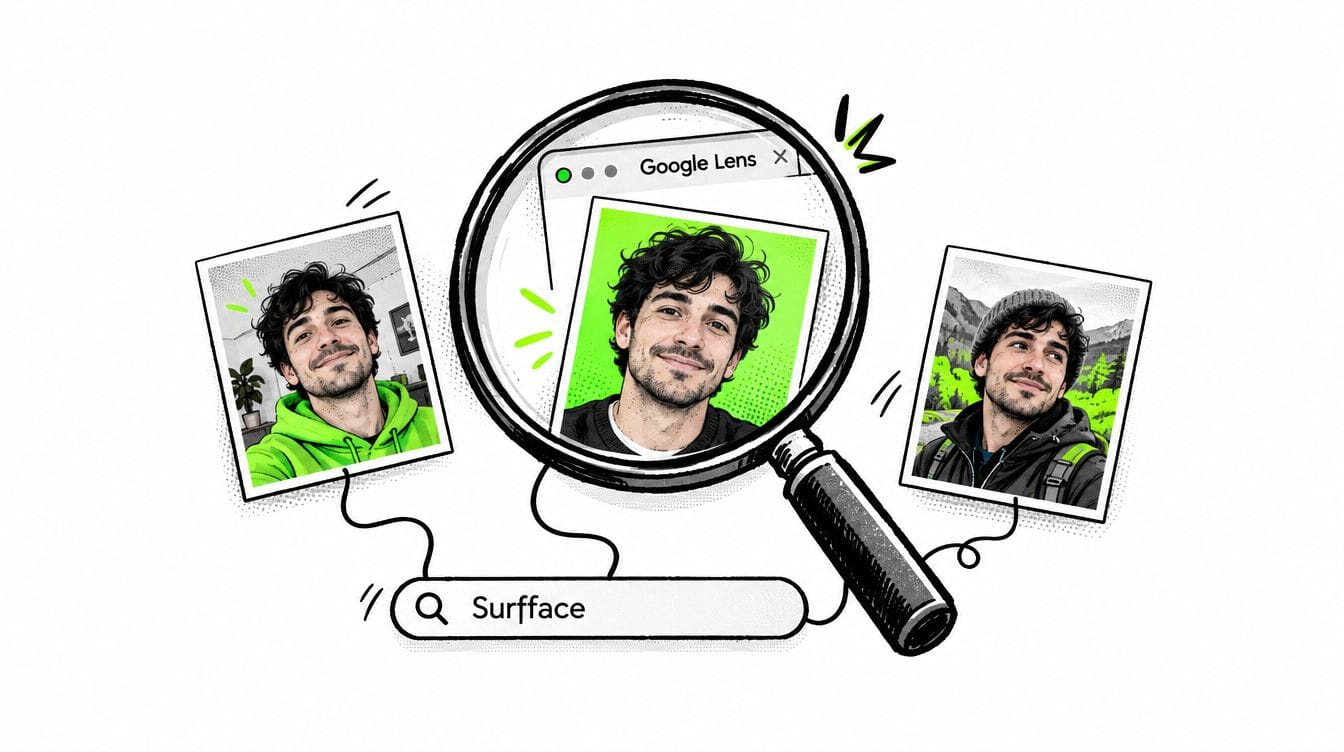
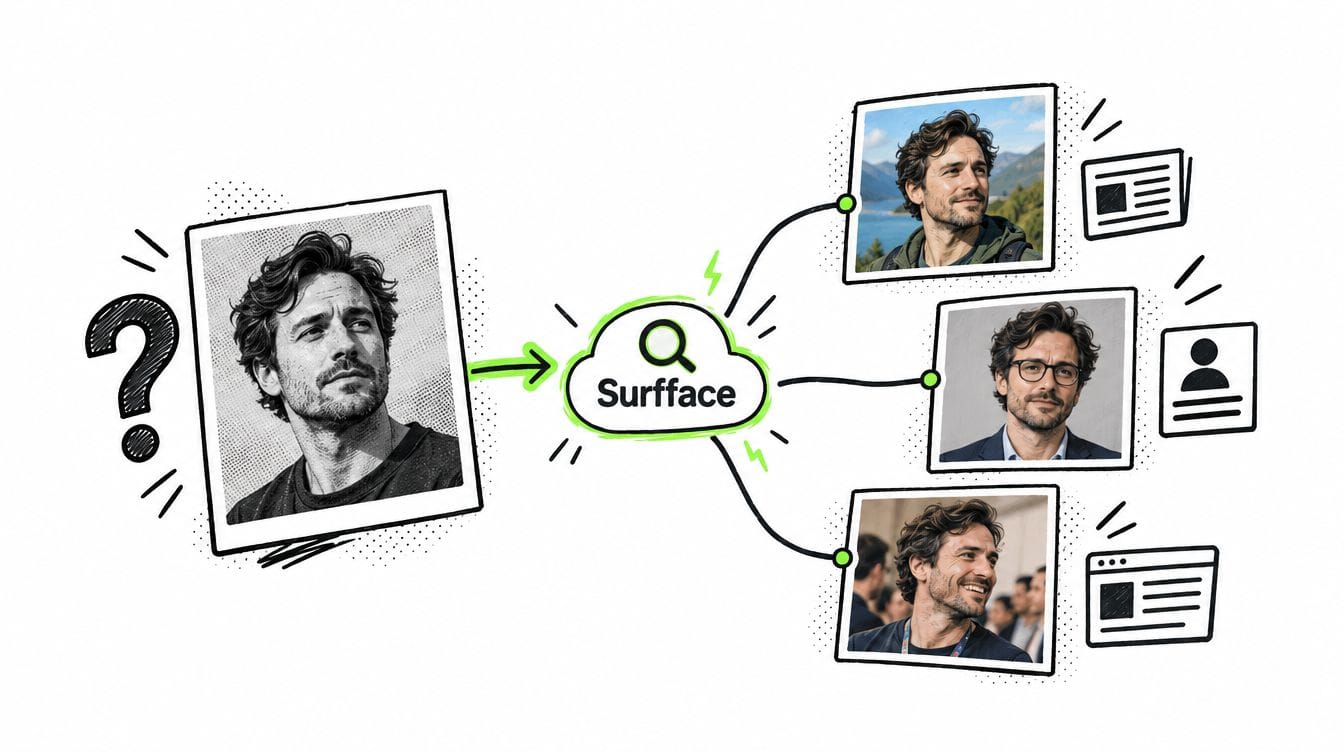
Search coverage matters. A basic image search tool may only find exact photo copies. That can help if someone reused the same picture, but it often fails when the same person appears in another photo, angle, crop, or background.
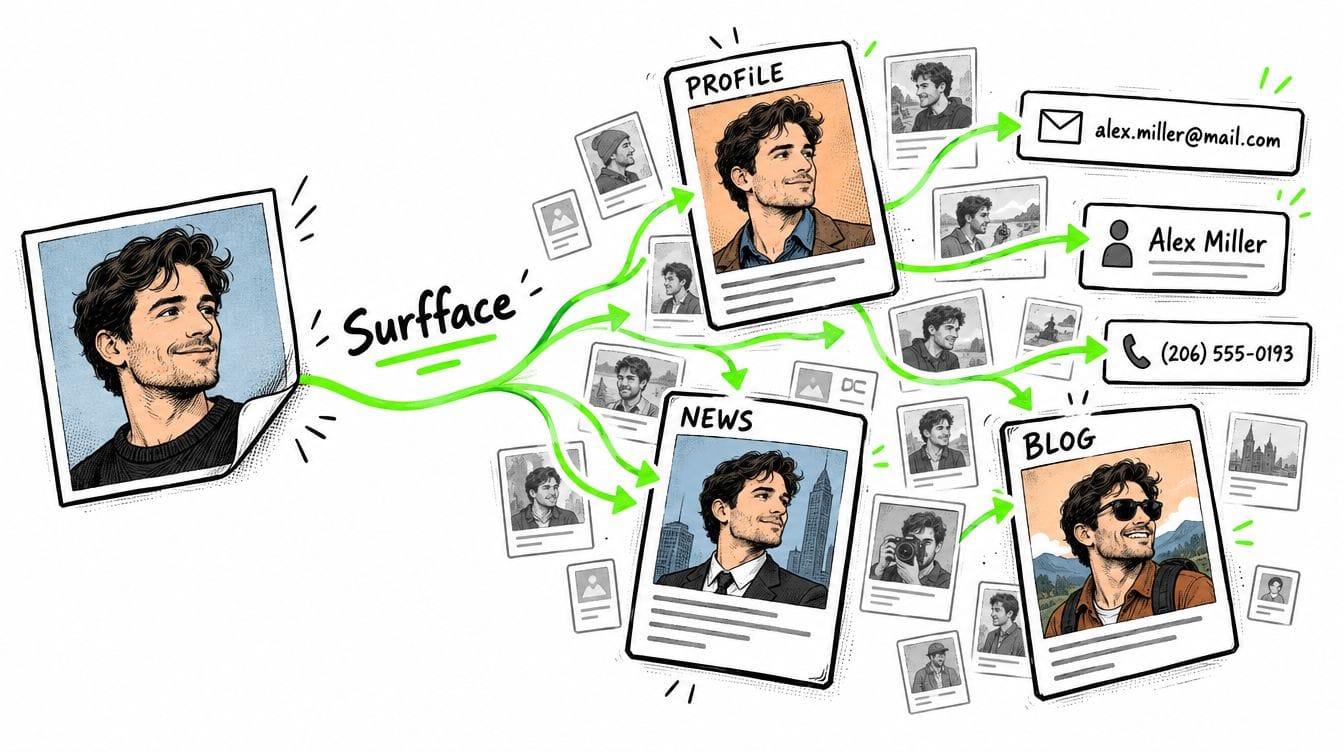
A stronger face search engine for people should search across a deeper index, including public websites, public social profiles, news pages, image sources, and available public records.
The larger and more relevant the index, the higher the chance of finding useful results.
Look for fresh and available data
An outdated database is often close to useless. Profiles disappear, records change, pages are removed, and sources become unavailable.
A good face search engine online should rely on actively maintained sources. Freshness matters because old or broken results can mislead users or waste time.
Prioritize social profile discovery
For many searches, social profiles are the most useful results. They can help you check whether a person's story matches their public online presence, whether a dating profile uses stolen photos, or whether the same face appears under different names.
This is where many generic reverse image tools are weak. A good face image search should be able to discover public social signals, not just duplicate image files.
Check for public-record coverage
Some people search tools can also search available public records, including mugshots, criminal-record sources, and registered sex offender registries where legally available.
This does not make the tool an official background check or identity verification service. Results should be treated as public-source leads that need review. Still, this type of coverage can add important context when checking a person by photo.
Try before you pay
Use tools that offer a free limited face image search, low-cost trial, preview, or some proof of results before asking for a larger payment.
Many apps advertise dramatic face search results but ask for money before showing whether they found anything useful. In many cases, they have weak technology, shallow databases, or no serious index behind the product.
A trustworthy reverse image search engine for faces should give you enough information to decide whether unlocking more details is worth it.
Review privacy and compliance
Face search involves sensitive data. A responsible tool should have clear rules around privacy, safety, prohibited use, minors, sensitive content, opt-outs, and data handling.
Also check who operates the product. Avoid tools with no company information, no real legal documents, vague policies, or no contact details.
For example, Surfface is operated by a U.S. company and provides public legal documents, privacy policies, and procedures for search, safety, and data handling. That level of transparency matters when uploading a face photo.
Final checklist
Before choosing a face search engine, ask:
- Does it make realistic claims?
- Does it search more than exact image copies?
- Does it have broad and fresh source coverage?
- Can it discover public social profiles?
- Can it search relevant public records where available?
- Can you test it before paying?
- Does it clearly explain privacy, compliance, and data handling?
A good face search engine is not magic. It is a specialized people search tool built on source coverage, fresh data, useful matching, transparent pricing, and responsible privacy practices.

Stan leads product marketing at Surfface, bringing a mix of experience in OSINT and private investigations, along with expertise in digital marketing and product management.