Romance Scams and Fake Photos: How to Check Profile Pictures
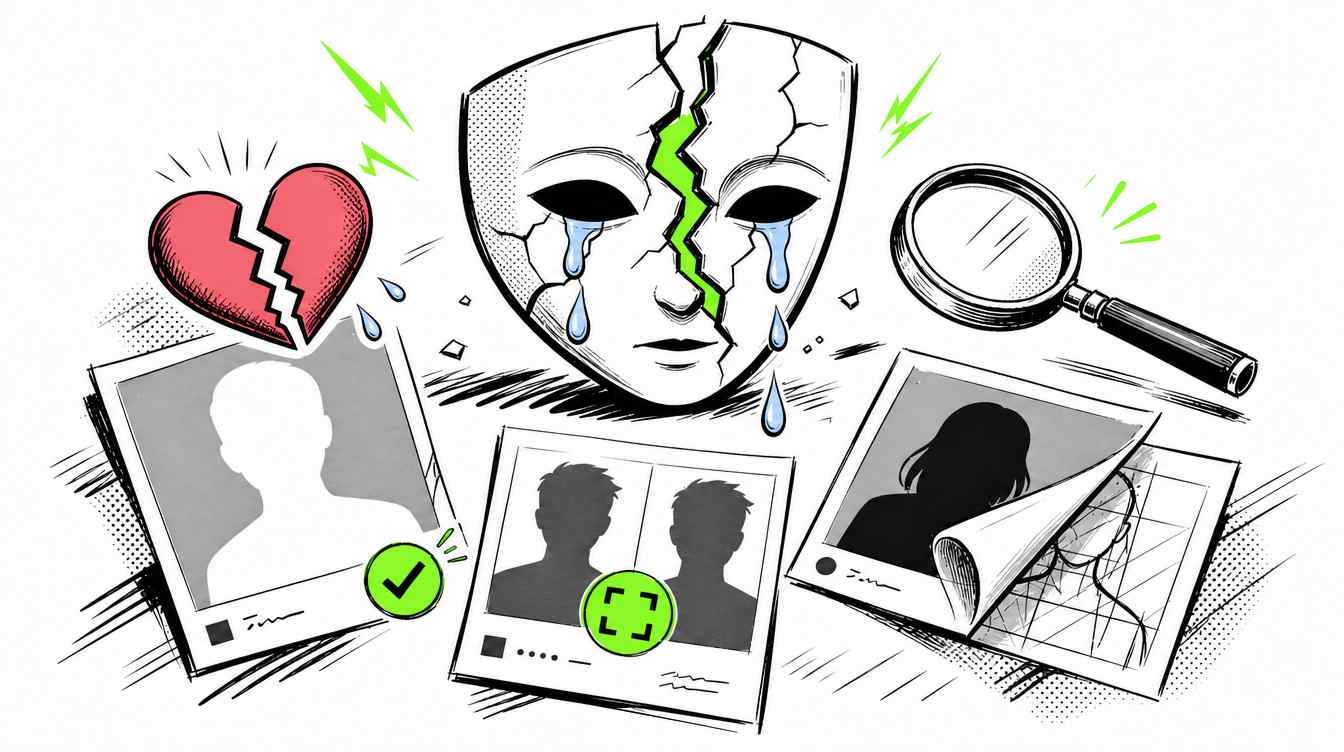
Romance scams are not random. They are planned, scripted, and built around one thing that makes people lower their guard: a believable face.
A romance scam can begin on Tinder, Bumble, Hinge, Facebook Dating, Instagram, WhatsApp, Telegram, or even LinkedIn. The profile may look normal. The photos may look real. The person may sound kind, lonely, successful, or emotionally available. But behind the profile could be a scammer using stolen images, fake details, or AI-generated photos to make you trust a person who does not exist.
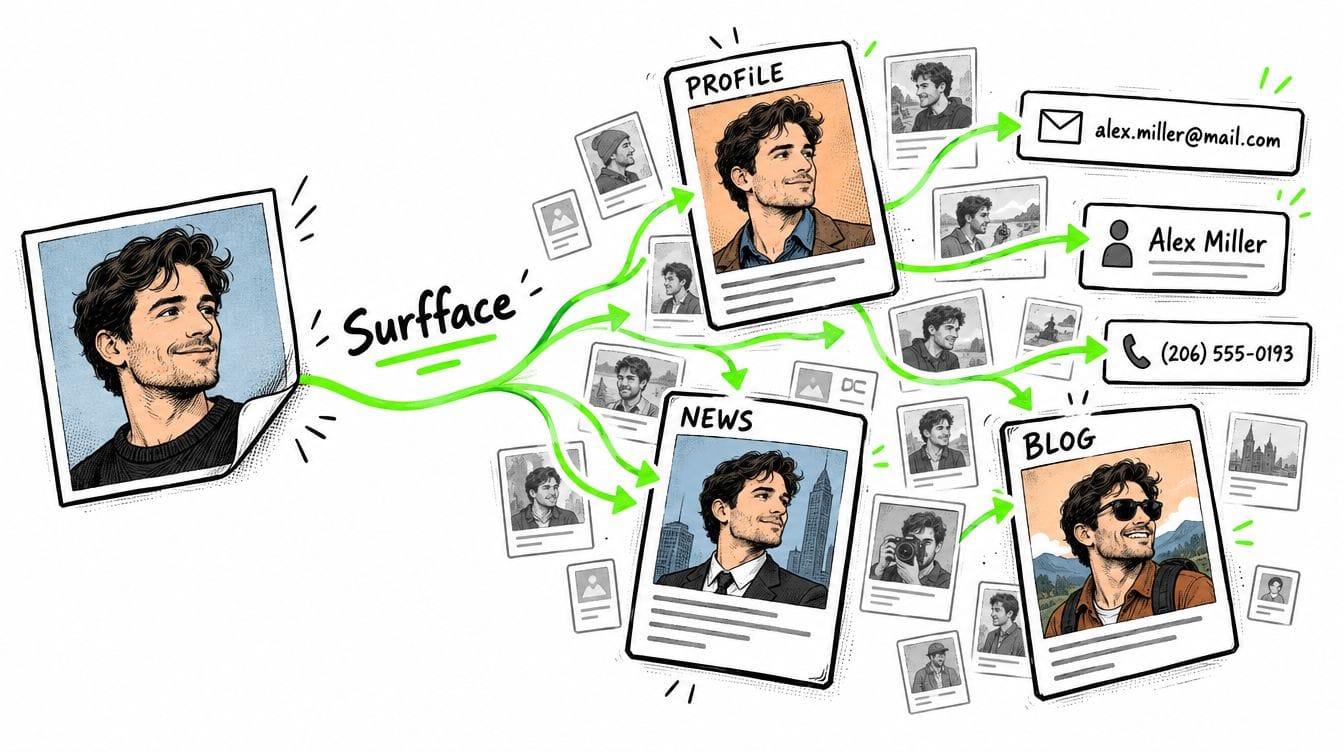
That is why checking profile pictures matters. Before you believe the story, send money, share private photos, or agree to meet, run a face search. Surfface helps you check where a face appears across public web sources, social profiles, indexed pages, and available U.S. public records, including registered sex offender registries.
Check before you trust or meet. Stay safe, stay informed.
What are romance scams?
Romance scams are online scams where someone creates a fake romantic connection to manipulate another person. The scammer may promise love, attention, commitment, marriage, travel, or emotional support. Once trust is built, they ask for money, gifts, crypto payments, private images, documents, or help with a fake emergency.
A romance scam usually does not feel like a scam at first. It feels like attention. It feels like chemistry. It feels like someone finally understands you.
That is the danger.
Online romance scams work because they move slowly enough to feel real, but fast enough to create emotional dependency. The scammer may message every morning, remember small details, compliment you constantly, and make you feel chosen. Then comes the pressure.
They may say their wallet was stolen. Their bank account is frozen. Their child is sick. Their business payment is delayed. Their travel ticket failed. Their crypto account needs one last deposit. The exact story changes, but the pattern is the same: trust first, request later.
See the real cost of romacne scams, catfishing and impersonation scams, from financial losses to emotional damage. View this page
Why romance scams photos are so convincing
Romance scams photos are often stolen from real people. Scammers take photos from public social media accounts, influencer pages, modeling profiles, professional websites, old dating accounts, adult content pages, or image search results.
This makes the fake profile look believable because the person in the photo may actually be real. They may have real posts, real friends, real travel photos, and real public history. The scammer is not inventing the face. They are stealing it.
This is why romance scam photos can be hard to detect by instinct. A clean selfie does not prove anything. A smiling family photo does not prove anything. A professional headshot does not prove anything. Scammers choose images that create emotional safety.
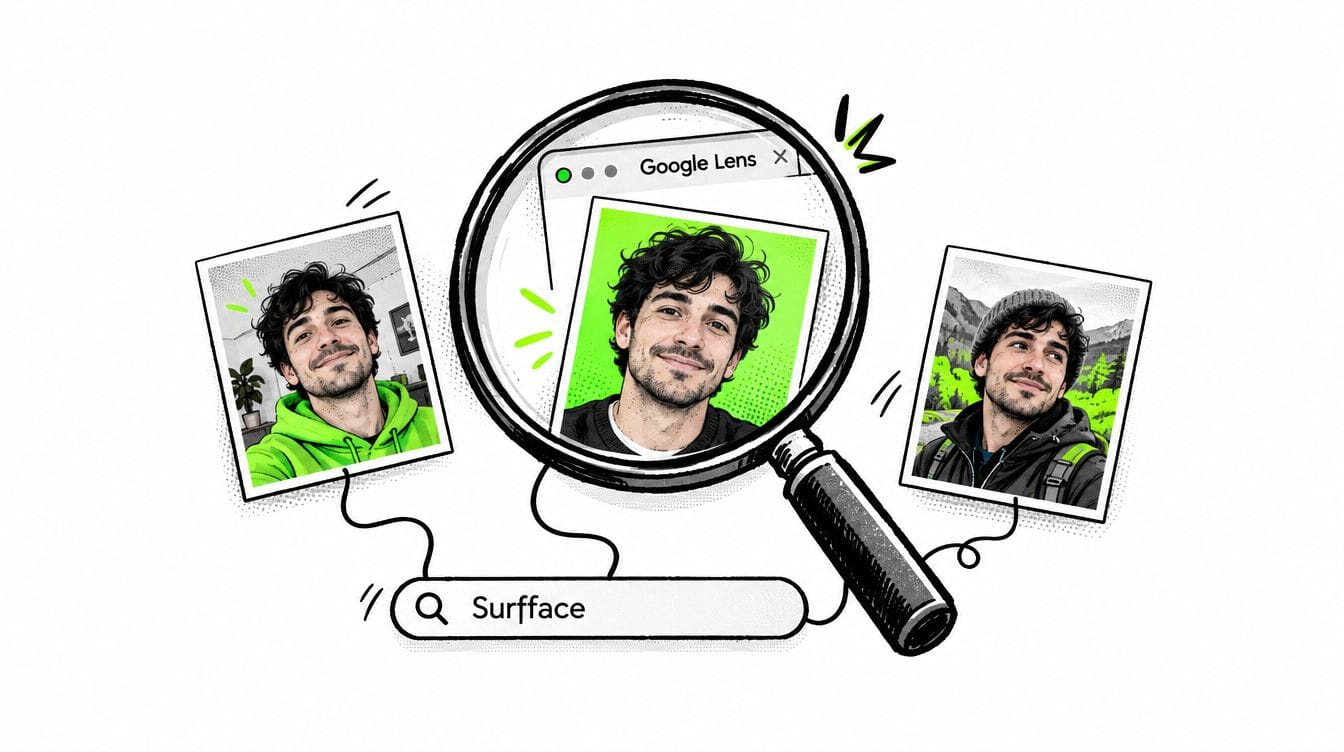
Surfface helps by searching the face itself, not just the exact file. If the same person appears elsewhere under a different name, in a different city, or in a context that contradicts the dating profile, that is a serious signal.
A profile can lie. A reused face often leaves a trail.
Signs of romance scams
The strongest signs of romance scams are usually behavioral, not visual. Pay attention when someone creates intimacy too quickly, avoids normal verification, and pushes you to act before you can think.
Common signs include fast emotional attachment, vague personal details, refusal to video chat, repeated excuses, inconsistent location, unusual work stories, requests to leave the dating app, and sudden financial problems.
Romance scams red flags often include phrases like “I have never felt this way,” “I trust only you,” “I need your help,” “Please do not tell anyone,” or “This is urgent.” These messages are designed to isolate you and make you feel responsible.
Another red flag is a profile that looks too perfect. Too many polished photos. No tagged photos. No natural public history. No local friends. No ordinary mess. Real people usually have inconsistent, imperfect, searchable lives. Fake profiles often look smooth because they are assembled.
If the face feels real but the story feels controlled, search the photo.
Catfishing, impersonation, and fake identity profiles
Catfishing is one of the most common forms of online romance scams. A catfish pretends to be someone else, usually by using stolen photos and false personal details. The goal may be money, emotional control, sexual content, revenge, blackmail, or access to your private life.
Impersonation scams are even more dangerous because the fake profile may copy a real person’s name, photos, job, location, and social identity. At first glance, the account can look legitimate. The scammer may even send links to public profiles to “prove” who they are.
But if the person messaging you is not the person in the photos, you are not dating. You are being handled.
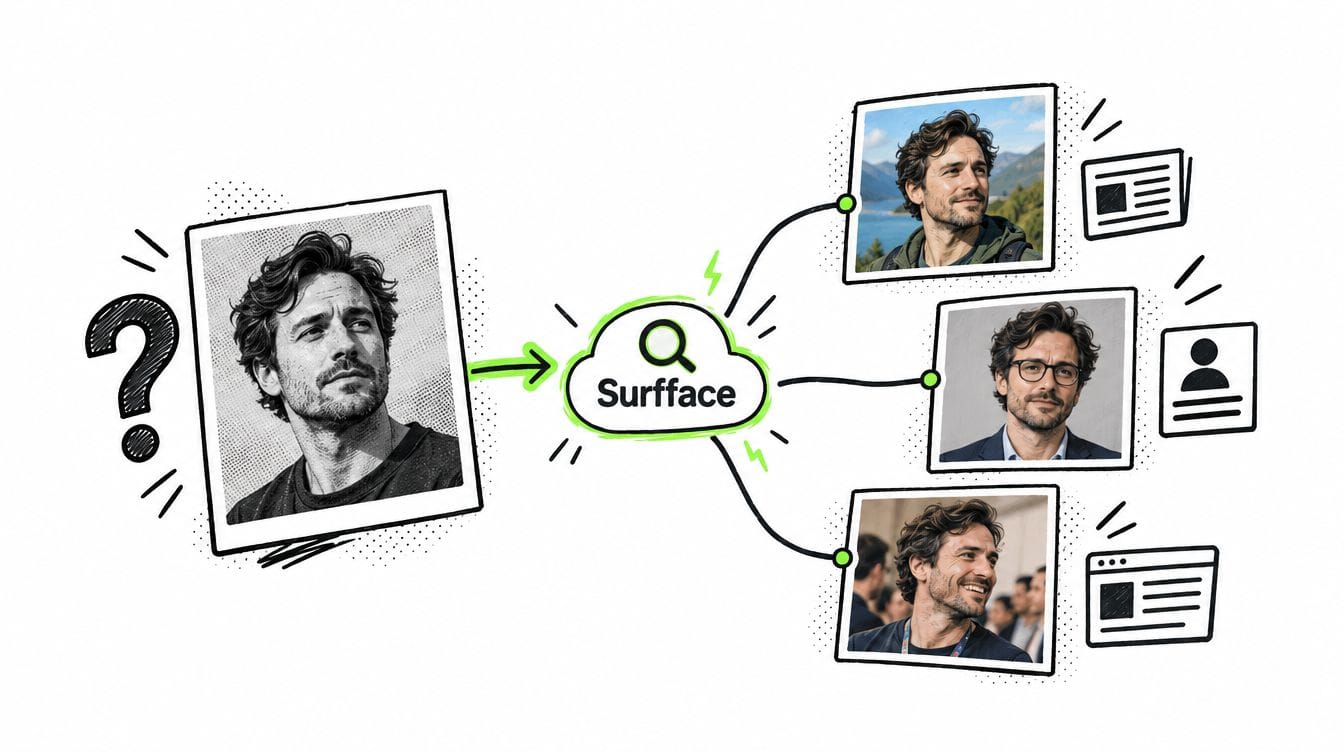
Surfface helps expose these patterns by checking whether the face appears in public sources outside the dating profile. If the same face belongs to someone with a different name, different age, different city, or completely different life, stop and verify before continuing.
AI-generated romance scam photos
A growing number of online romance scams now use AI-generated faces. These images may not belong to any real person. That makes them harder to catch with traditional reverse image search because there may be no original source.
AI romance scam photos may look attractive but slightly unnatural. The skin may be too smooth. The eyes may look strange. Backgrounds may feel vague. Earrings, hands, teeth, shadows, or glasses may look inconsistent. But AI images are improving fast, and many people cannot reliably spot them.
This is why you should not rely only on your eyes.
If a person has no credible public footprint, no live video, no consistent story, and no normal online history, treat that as a warning. Surfface can help you look for public face matches, suspicious absence of context, and other signals that may help you decide whether to continue.
No tool can prove a stranger is safe. But a search can reveal enough to make you pause.
How Surfface helps with romance scam photos
Surfface is built for face search and face checks across public sources. Instead of only checking whether one image file exists somewhere online, Surfface helps search for the same face across indexed websites, public social sources, news pages, public mentions, and available public records.
This matters in romance scams because scammers rarely give you reliable names. They may use fake names, nicknames, wrong ages, old photos, false locations, or stolen identities. A name search can fail immediately. A face search gives you another path.
With Surfface, you can check whether a dating photo is connected to other profiles, suspicious identity conflicts, public web appearances, or available U.S. public-record sources. Surfface also has a dedicated data pipeline for available U.S. registered sex offender records with face photos.
That makes Surfface useful for safe dating, not only scam detection. Many women use Surfface to learn more about potential dates before meeting them in person. It helps them check whether a person may be hiding something important, especially when the person’s name, background, or story feels incomplete.
This is not only for women. Anyone can be targeted by online romance scams. Anyone can meet the wrong person from a dating app. A quick face check can help you avoid a serious mistake.
How to avoid romance scams
To avoid romance scams, do not treat profile photos as proof. Treat them as evidence to check.
Start by saving the clearest profile picture. Run a reverse image search. Then run a Surfface face search to check whether the face appears elsewhere. Compare every result with what the person told you.
- Does the name match?
- Does the location match?
- Does the age make sense?
- Does the face appear on unrelated profiles?
- Is the image connected to adult pages, scam-like content, fake accounts, public records, or safety signals?
- Are there registered sex offender signals in available U.S. data?
Then verify the person in real life. Ask for a live video call. Meet only in a public place. Tell someone where you are going. Do not send money. Do not send private images. Do not share documents. Do not ignore pressure, urgency, or secrecy.
Romance scams depend on speed and emotion. Slow down and check.
A fake profile can look warm. A stolen photo can look innocent. An AI face can look human. A scammer can sound caring until they get what they want.
Before you trust a match, search the face. Before you meet a stranger, check the profile picture. Before you believe the story, look for public evidence.
Run a Surfface global face search and face check to see whether your partner or future date may be hiding something important.
Check before you trust or meet. Stay safe, stay informed.

Stan leads product marketing at Surfface, bringing a mix of experience in OSINT and private investigations, along with expertise in digital marketing and product management.