Search a Person by Photo: How Public Face Matches Work
Stanley Wiggins
August 4, 2026
4 min read

Trying to search person by photois useful when you have an image but not enough reliable identity details. A name can be incomplete, fake, misspelled, or missing entirely. A face, however, may appear across public websites, social profiles, news pages, public records, or other open-source results.
That is where public face search tools like Surfface help. Surfface is built to find person by photoacross indexed public sources, with especially strong discovery for social profiles and U.S. public-record sources such as mugshots, criminal-record signals, and registered sex offender records where available.
What does it mean to search a person by photo?
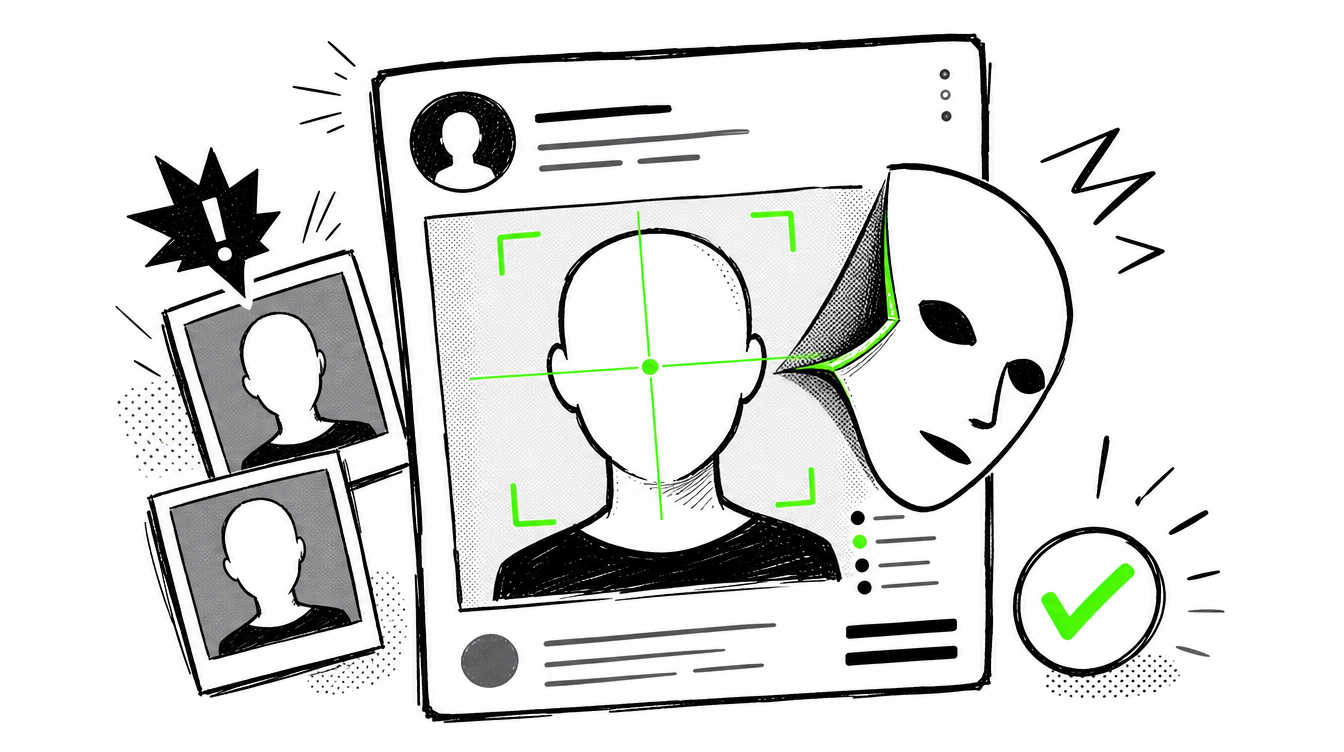
To search person by photo means using a face image as the starting point for discovery. Instead of typing a name into a search engine, you upload a clear face photo and let the system look for visually similar public face matches.
This is different from a basic reverse image search. Traditional reverse image search often looks for exact or near-exact copies of the same photo. A face search person by photo tool focuses on whether the same person appears in different images, even when the crop, angle, hairstyle, age, lighting, or background has changed.
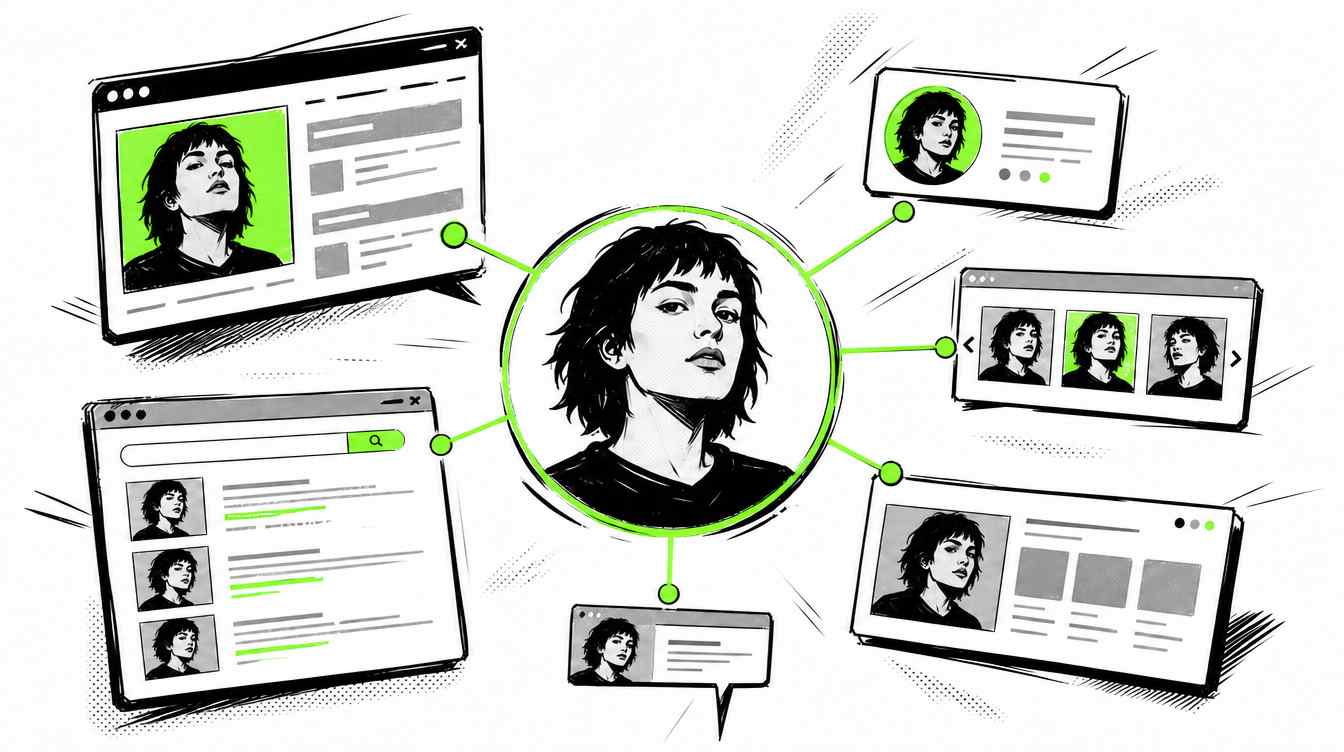
That matters because people often reuse different photos across platforms. A scammer may use one image on a dating app, another on a social profile, and another on a public website. A good face search tool should help connect those public visual signals.
How public face matches work
Public face search depends on several factors. The most important are index coverage, photo quality, source availability, and matching accuracy.
- Index coverage means how many public images, profiles, and records the system can search. If a person appears on public pages that are not indexed, no tool can reliably show those results.
- Photo quality also matters. A clear, front-facing image usually performs better than a blurry, filtered, cropped, or side-angle photo. Sunglasses, heavy makeup, low resolution, facial obstruction, or extreme lighting can reduce match quality.
- Source availability is another limit. Public face search tools can search only open-source and publicly available information. They do not access private databases, private messages, locked accounts, friends-only content, or closed social media areas.
A private profile may still expose public elements such as a profile photo, username, display name, or preview page. Surfface can search publicly visible profile signals, open web pages, public records where available, and other indexed public sources. It does not break into private accounts or access hidden content.
Why Surfface offers free face search first
A Surfface free face search lets you check whether the system can find relevant visual matches for the uploaded face before you pay for full access.
In the free results, you can review face matches and similarity signals to understand whether the search is likely useful. This is important because face search quality depends on the specific photo, the person’s public presence, and whether relevant sources are available in the index.
Surfface, like other top-tier face search engines, lets you test the search first. You can see whether it finds potentially relevant matches before paying for source details. If the results look useful, you can unlock the sources for 16 credits.
After unlocking, you can access more source context, such as where the match was found, related public information, names when available, usernames, social profile context, and other details connected to the indexed public source.
That model is fair for the user. The free search shows whether the technology is working for your case. Payment is required only when you see enough value to unlock the source information.
How to search a person by photo online
Step 1: Upload a clear face photo
Start with a clear photo of the person you want to check. Avoid blurry images, sunglasses, heavy filters, extreme angles, or photos where the face is too small. You can also add a name if you have one, so the search can combine face discovery with text-based signals.
Step 2: Run a free face search
After you upload the photo, Surfface searches across public sources where that face may appear. Surfface’s index includes over 100 million social profiles and over 10 billion images. It also has dedicated U.S. data pipelines for mugshots, registered sex offender sources, and other public-record checks where available.
Step 3: Review possible matches
Surfface shows possible face matches before you unlock source details. This helps you decide whether the search found something worth checking further.
Look at similarity signals, face thumbnails, and whether the results appear visually relevant. A strong visual match may indicate that the same person appears somewhere else online. A weaker match may still be worth reviewing if the original photo is old, low-quality, or partially obstructed.
Step 4: Unlock sources if the match looks useful
If you see a promising match and need more information, you can use credits to unlock source details. This may include source pages, profile links, public-record context, usernames, names when available, or other public information connected to the indexed source.
Unlocking is most useful when the free search shows relevant matches and you need to understand where those matches came from.
Can you find person by photo free?
You can start with a find person by photo free search on Surfface. The free search helps you see whether there are possible face matches before deciding whether to unlock full source information.
Free image search tools may also help in simple cases, especially when the exact same photo appears online. However, they are often less effective when the same person appears in different photos, crops, angles, or backgrounds. Specialized face search is better suited for those cases because it is designed around the person in the image, not only the image file itself.
Common use cases for searching a person by photo
People use Surfface to check suspicious strangers, verify social profiles, detect catfishing, investigate impersonation, protect their personal image, reconnect with someone when only a photo is available, or review public-record signals tied to a face.
For example, if someone may be using your face in fake profiles or scams, a face search can help detect early signs of photo misuse. If you are communicating with someone online and their story feels suspicious, a public face search can help you check before you trust.
Surfface is not a private surveillance tool, a background check provider, or a way to access hidden accounts. It is a public face search engine that helps you search open web results, public social signals, and available public records by face.
Knowinghow to search a person by photocan help when names are unreliable or unavailable. A strong face search tool should let you test the search first, review possible matches, and unlock source details only when the results look useful.
Surfface is built for exactly that process: upload a photo, run a free search, review possible face matches, and unlock public source context when the match is worth checking further.

Stanley Wiggins
Stan leads product marketing at Surfface, bringing a mix of experience in OSINT and private investigations, along with expertise in digital marketing and product management.